What Is the Lifespan of LED Wall Lights?
When buying a wall light, most people naturally focus on its appearance first. Does it fit the room? Is the design modern enough? Is the light warm or cool? Can it be dimmed? But there is another question that becomes important once the novelty wears off: How long will the LED wall light actually last? LED wall lights are often advertised with lifespans such as 25,000, 50,000, or even 100,000 hours. Those numbers sound impressive—and compared with traditional incandescent or halogen lighting, they are. But there is an important detail that many buyers overlook: the advertised lifespan of an LED wall light is not necessarily the same thing as the number of hours the entire wall light will continue working perfectly. An LED wall light is a complete lighting system. Its LED chips, driver, circuit board, housing, heat dissipation, optical components, wiring, and even installation environment can all affect its real-world service life. So, how long can you realistically expect LED wall lights to last? And what should you look for if you are buying them for a home, hotel, commercial project, or lighting brand? Let's take a closer look.
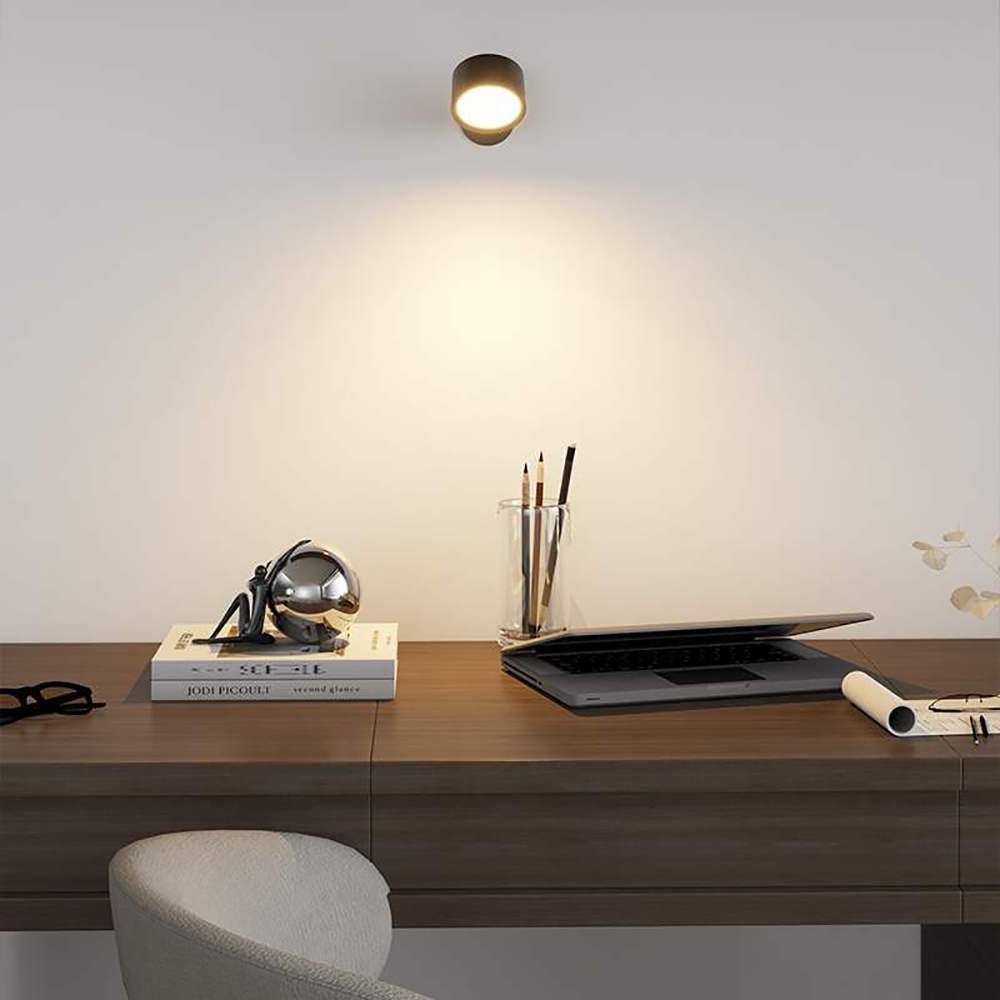
How Long Do LED Wall Lights Last? A typical quality LED wall light can be designed for around 25,000–50,000 hours or more, depending on its construction, components, operating conditions, and the lifespan standard used by the manufacturer. Some higher-end LED lighting products may carry ratings of 50,000–100,000 hours, but it is important not to interpret this as "the fixture will produce full brightness for 100,000 hours." Instead, LED lifespan is generally associated with lumen depreciation—the gradual reduction in light output over time. For example, an L70 rating of 50,000 hours generally means that the LED system is expected to retain approximately 70% of its initial light output at that point under specified testing conditions. This is fundamentally different from the way traditional incandescent bulbs are normally understood. An incandescent bulb may work normally and then suddenly fail when its filament breaks. LEDs generally degrade more gradually. naturaLED explains that LED products typically experience gradual lumen depreciation rather than the abrupt failure associated with traditional light sources. That distinction is particularly important when evaluating integrated LED wall lights. A fixture may still turn on after many years, but the question is whether it is still producing enough light for the application. What Does 50,000 Hours Actually Mean? "50,000 hours" sounds almost absurdly long. If an LED wall light operated continuously 24 hours a day, 50,000 hours would be approximately 5.7 years. But residential wall lights rarely operate 24/7. Suppose a wall light is used for: 3 hours per day → approximately 45.7 years of operating time 5 hours per day → approximately 27.4 years 8 hours per day → approximately 17.1 years 12 hours per day → approximately 11.4 years These are mathematical operating-hour equivalents, not guarantees that the fixture itself will physically remain perfect for that many calendar years. In real homes, the driver, electronics, switches, connectors, batteries, sensors, and environmental conditions can become the limiting factors before the LED itself reaches its theoretical maximum. OEO Energy Solutions notes that quality LED products can reach 50,000 hours or more, but actual longevity depends heavily on component quality, thermal management, power stability, and operating conditions. So when a manufacturer says an LED wall light lasts 50,000 hours, the better question is: "50,000 hours until what?" That is where LED lifespan ratings become useful. L70, L80 and L90: What Do They Mean? If you're comparing professional LED wall lights, you may come across terms such as L70, L80 and L90. They describe lumen maintenance. Imagine that a new wall light produces 1,000 lumens. If its rating is: Rating Meaning L90 Approximately 90% of initial light output remains L80 Approximately 80% remains L70 Approximately 70% remains So an L70 rating of 50,000 hours means the lighting system is projected to maintain about 70% of its original light output at 50,000 hours under the specified conditions. This is why simply comparing "50,000 hours vs. 30,000 hours" can sometimes be misleading. For B2B buyers, hotel projects, commercial developments, and lighting brands, it can be more useful to examine lumen maintenance data and test conditions rather than looking at the headline lifespan number alone. American Lighting Systems also points out that ratings such as L70 and L90 relate to the percentage of initial light output retained over time, while factors such as operating temperature can significantly affect the actual result. Why Don't LED Wall Lights Last Forever? This is probably the biggest misconception about LED lighting. You may hear someone say: "LEDs last forever." Unfortunately, LEDs haven't quite achieved immortality yet. An LED wall light is made up of multiple components, and the LED chip is only one of them. The system may contain: LED chips + PCB + driver + wiring + connectors + optics + housing + heat-dissipation structure + sensors or controls Any one of these components can potentially fail. naturaLED emphasizes that the useful life of an LED lighting system depends on the complete system rather than just the LED package. Electronics, thermal management, optics, wiring, connectors, seals, and other components can all affect performance and reliability. This is especially important for integrated LED wall lights, where the LED source isn't designed to be replaced like a conventional screw-in bulb. If the LED module or driver eventually fails, the entire fixture may require repair or replacement. Heat Is One of the Biggest Enemies of LED Wall Lights If there is one factor worth paying particular attention to, it is heat. LEDs are more efficient than traditional incandescent lighting, but that doesn't mean they produce no heat. The electrical energy that doesn't become visible light still needs to be managed. If heat becomes trapped inside a poorly designed wall light, internal temperatures can rise. Over time, excessive heat can accelerate: LED lumen depreciation Driver degradation Component aging Color shift Electrical failures American Lighting Systems describes thermal management as one of the most important factors affecting LED longevity, noting that heat can increase lumen depreciation and place additional stress on drivers and other components. This is why the physical design of an LED wall light matters. A beautiful ultra-thin fixture may look great, but if the internal thermal design is poor, its long-term performance may suffer. For manufacturers, this creates an interesting engineering challenge: how do you make an LED wall light thinner without sacrificing heat dissipation? The answer often involves aluminum housings, appropriately designed heat sinks, efficient LED packages, suitable drive currents, and careful internal component placement. The LED Chip Isn't Always the First Thing to Fail This surprises many consumers. If an LED wall light stops working after a few years, the LED chip itself may not necessarily be the culprit. The LED driver is often a critical component to consider. The driver converts and regulates electrical power so that the LEDs receive the appropriate current and voltage. If the driver overheats or is exposed to unstable power, its components can degrade. A high-quality LED chip paired with a poor-quality driver is therefore not necessarily a high-quality LED wall light. Think of it like buying a sports car and putting cheap tires on it. The engine may be excellent, but the overall system still has a weakness. OEO notes that voltage fluctuations, poor heat dissipation, and low-quality components can contribute to premature LED lighting failure. For B2B buyers, asking about driver brand, driver specifications, operating temperature, surge protection and warranty can therefore be just as important as asking about the LED chip. Does Turning LED Wall Lights On and Off Frequently Reduce Their Lifespan? Not in the same way people often assume. One of the advantages of LED technology is that LEDs generally handle frequent switching better than many traditional lighting technologies. Lumens Depot specifically notes that frequent on/off switching does not inherently damage LEDs in the way it can affect some older lighting technologies, and motion sensors can actually reduce total operating time by turning lights off when they're not needed. However, the driver and control electronics are still part of the system. This matters for modern wall lights equipped with: Motion sensors Touch controls Remote controls Dimming Smart home connectivity RGB or tunable white functions The quality and compatibility of those electronic systems can affect overall reliability. So the better conclusion isn't "never turn your LED wall light off." It is: Use a properly designed fixture with compatible controls and quality electronics. Battery-Powered LED Wall Lights Are a Different Story There is another category worth discussing: rechargeable or battery-operated LED wall lights. These products are becoming increasingly popular because they can be installed without traditional electrical wiring. But their lifespan has another variable: the battery. The LED module itself may theoretically last tens of thousands of hours, but the rechargeable battery has a finite charging-cycle life. After repeated charging and discharging, battery capacity gradually decreases. This means a rechargeable LED wall light might still have a perfectly healthy LED source while its battery no longer provides the same runtime it did when new. For product manufacturers and brands developing cordless wall lights, battery quality, charging management, thermal protection and battery replacement strategy are therefore important parts of the product's overall life cycle. What Can Shorten the Lifespan of LED Wall Lights? A good LED wall light can last for many years, but certain conditions can shorten its useful life considerably. Poor Heat Dissipation An enclosed fixture without adequate thermal management can accumulate heat. This is particularly important for high-output LED wall lights. Unstable Power Voltage spikes and electrical instability can damage LED drivers and other electronics. For commercial installations, appropriate electrical protection can help reduce this risk. Poor-Quality Components The LED chip may receive all the attention in the marketing materials, but the driver, PCB, capacitors, connectors and housing are equally important to system reliability. Incorrect Installation A fixture installed in an environment outside its rated conditions may not achieve its advertised lifespan. For outdoor LED wall lights, moisture protection and the correct IP rating are particularly important. Extreme Temperatures Very high ambient temperatures can accelerate component aging, while extremely cold or rapidly changing conditions can also create challenges depending on the product design. Incompatible Dimmers Not every LED wall light is compatible with every dimmer. An incompatible dimming system can cause flickering, unstable operation, or stress on the driver. Lumens Depot also recommends matching dimmers correctly and choosing fixtures appropriate for their installation environment. How Can You Make LED Wall Lights Last Longer? You don't need to perform complicated maintenance on a residential wall light. A few sensible choices can make a meaningful difference. First, choose a product with a clearly specified lifespan and preferably transparent testing information. Second, make sure the fixture is appropriate for its environment. Don't install an indoor-rated wall light outside simply because the product looks waterproof. Third, pay attention to heat. Avoid covering ventilation areas or placing the fixture directly next to unnecessary heat sources. Fourth, use compatible power supplies, dimmers and controls. And finally, for outdoor applications, choose the correct IP protection and maintain the fixture so that dust and debris do not interfere with heat dissipation. For commercial or large-scale projects, manufacturers and suppliers should be able to provide more detailed technical documentation where appropriate, including information related to LM-80, TM-21, lumen maintenance, thermal testing and driver specifications. American Lighting Systems recommends looking beyond headline lifespan claims and checking performance data under conditions relevant to the actual application. LED Wall Lights vs. Traditional Wall Lights: Lifespan Comparison The long lifespan of LEDs becomes easier to understand when compared with older technologies. Lighting Technology Typical Lifespan Incandescent Around 1,000 hours Halogen Around 2,000–4,000 hours CFL Around 8,000–10,000 hours LED Around 25,000–100,000 hours* *Actual lifespan varies by product and operating conditions. These figures are useful for understanding the general difference, but they shouldn't be interpreted as universal guarantees. Lumens Depot lists LED products in the broad range of 25,000–100,000 hours and emphasizes that real-world life depends on factors such as quality, thermal management and the fixture environment. The practical advantage of LED wall lights is therefore not simply "they never burn out." It's that they can provide many more hours of useful illumination with substantially less frequent replacement. What Should You Look for When Buying Long-Life LED Wall Lights? If lifespan is one of your main purchasing criteria, don't stop at the number printed on the product page. Look at the whole product. For homeowners, check the stated lifespan, warranty, brightness, dimming compatibility, installation environment and product quality. For architects, lighting designers, distributors and B2B buyers, go deeper. Consider the LED package, driver quality, thermal design, IP rating, surge protection, lumen maintenance, certifications and availability of replacement components. A manufacturer that can explain why its product is expected to last 50,000 hours is generally more convincing than one that simply prints "50,000 HOURS" in giant letters on the box. So, What Is the Real Lifespan of LED Wall Lights? For most quality products, 25,000–50,000 hours is a reasonable range to encounter, with some products rated considerably higher. But the number alone doesn't tell the whole story. An LED wall light doesn't have a magical timer hidden inside that reaches 50,000 hours and suddenly announces, "My shift is over." Instead, its light output gradually changes, and different components age at different rates. The real lifespan depends on: LED quality + driver quality + thermal management + electrical stability + operating hours + environment + installation + control system. This is why two LED wall lights with the same advertised 50,000-hour lifespan can perform very differently in the real world. For consumers, choosing a reputable product and installing it correctly is usually the most practical approach. For lighting brands and B2B buyers, the issue goes deeper: long-term product reliability starts during product design and component selection, not after the fixture reaches the customer's wall. Ultimately, the best LED wall light isn't necessarily the one with the biggest lifespan number. It is the one that can deliver stable, useful light for years under the conditions where it is actually going to be used. And that is a much more meaningful definition of "long-lasting" lighting.