The Future of Finance: Real-World Asset Tokenization Trends in 2026
The financial ecosystem in 2026 is undergoing a structural transformation driven by the convergence of blockchain infrastructure, regulatory maturation, and institutional capital inflows. Real-world asset (RWA) tokenization has emerged as a pivotal mechanism for bridging traditional finance (TradFi) and decentralized finance (DeFi), enabling the digitization of tangible and intangible assets into programmable on-chain representations. This paradigm shift is not merely a technological upgrade but a redefinition of asset ownership, liquidity provisioning, and capital efficiency across global markets.
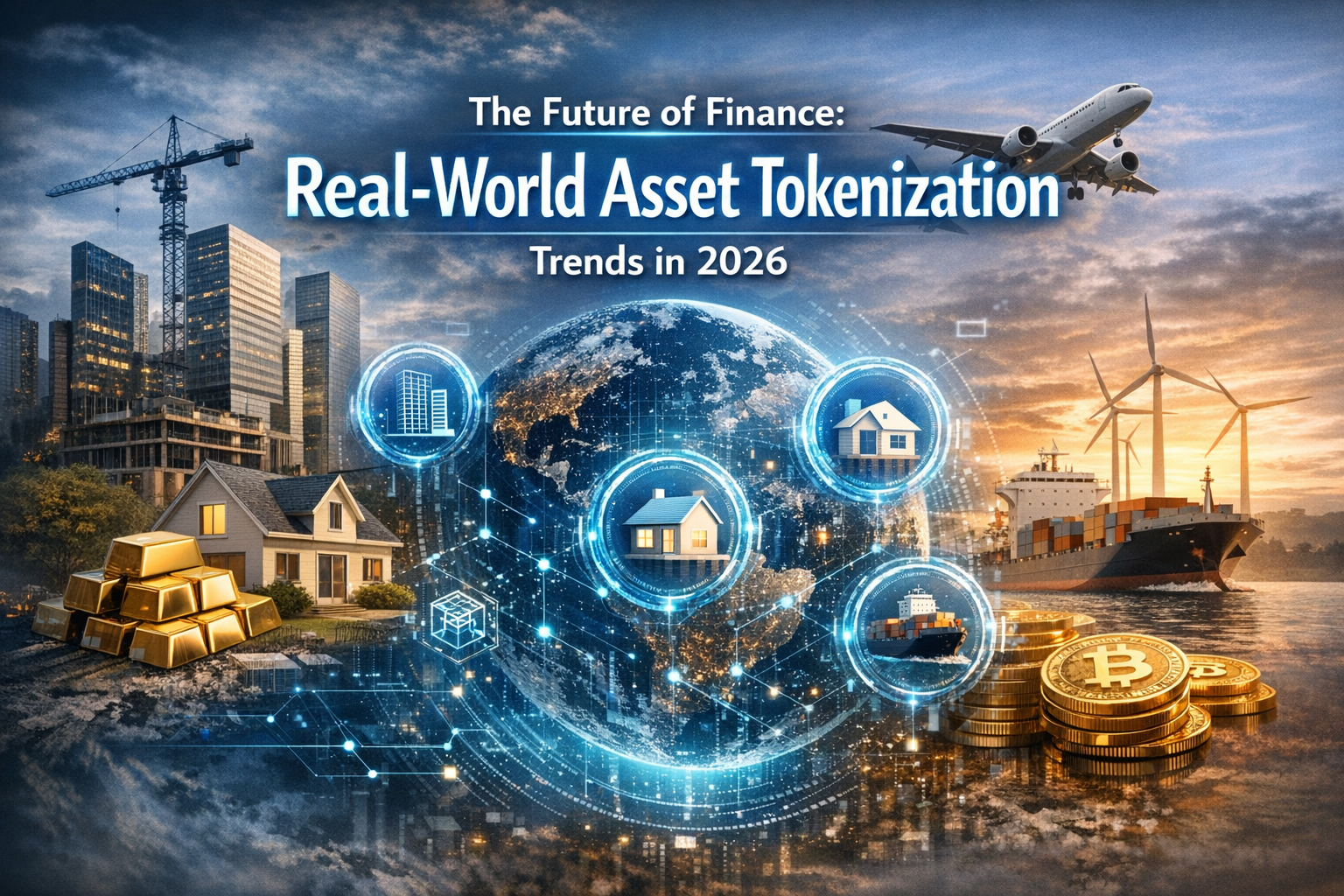
At its core, real-world asset tokenization facilitates fractional ownership, enhances market accessibility, and introduces unprecedented transparency through immutable ledger systems. From real estate and commodities to debt instruments and intellectual property, tokenized assets are unlocking new avenues for both issuers and investors. The growing relevance of real world asset tokenization platform development is indicative of a broader industry push toward scalable, interoperable, and compliant blockchain ecosystems.
Institutional Adoption and Regulatory Convergence
One of the most significant trends shaping RWA tokenization in 2026 is the accelerated participation of institutional players. Asset managers, investment banks, and sovereign entities are increasingly leveraging tokenization frameworks to optimize portfolio diversification and streamline settlement processes. Regulatory bodies, once cautious, are now actively designing frameworks that accommodate tokenized securities and digital asset custody.
Key developments include:
- Integration of tokenized assets within existing capital market infrastructure, including clearinghouses and custodians
- Emergence of regulatory sandboxes enabling controlled experimentation with tokenized financial instruments
- Standardization of compliance protocols such as Know Your Customer (KYC) and Anti-Money Laundering (AML) within smart contract layers
This convergence of regulation and innovation is reducing systemic friction, thereby fostering trust and accelerating mainstream adoption.
Liquidity Engineering and Fractionalization Dynamics
Liquidity fragmentation has historically been a constraint in traditional asset classes such as real estate and private equity. Tokenization addresses this inefficiency through fractional ownership models and secondary market enablement. By converting high-value, illiquid assets into divisible digital tokens, market participants can access previously inaccessible investment opportunities.
Advanced liquidity engineering mechanisms are also being deployed, including automated market makers (AMMs) tailored for RWAs and hybrid liquidity pools that combine on-chain and off-chain data feeds. These innovations are enhancing price discovery, reducing bid-ask spreads, and enabling near-instantaneous settlement cycles.
Moreover, programmable token standards are facilitating dynamic asset behavior, such as revenue-sharing models and automated dividend distribution. This programmability introduces a layer of financial logic that traditional instruments lack, thereby increasing operational efficiency and investor engagement.
Interoperability and Cross-Chain Infrastructure
As the tokenization landscape expands, interoperability has become a critical requirement for ensuring seamless asset transfer across blockchain networks. In 2026, cross-chain protocols and interoperability layers are playing a central role in enabling the movement of tokenized assets between disparate ecosystems without compromising security or compliance.
Key interoperability trends include:
- Deployment of cross-chain bridges with enhanced cryptographic validation mechanisms
- Adoption of standardized token frameworks such as ERC-3643 and similar compliance-oriented protocols
- Integration of oracle networks for real-time data synchronization between on-chain and off-chain environments
These advancements are mitigating the risks associated with network silos and are paving the way for a unified digital asset marketplace. Interoperability is not just a technical necessity but a foundational pillar for scaling RWA tokenization globally.
Data Integrity, Oracles, and Risk Mitigation
The reliability of tokenized assets is intrinsically linked to the accuracy of underlying data inputs. Oracles serve as the bridge between real-world data and blockchain networks, ensuring that asset valuations, legal ownership records, and performance metrics are accurately reflected on-chain. In 2026, oracle architectures are becoming increasingly sophisticated, incorporating decentralized data aggregation and multi-source validation techniques.
Risk mitigation strategies are also evolving to address challenges such as smart contract vulnerabilities, oracle manipulation, and regulatory non-compliance. Advanced auditing frameworks, formal verification methods, and decentralized insurance protocols are being integrated into tokenization platforms to enhance system resilience.
Additionally, legal enforceability of tokenized assets is gaining traction through the incorporation of digital identity frameworks and on-chain legal agreements. These mechanisms are ensuring that token holders possess verifiable and enforceable rights, thereby aligning blockchain-based assets with existing legal systems.